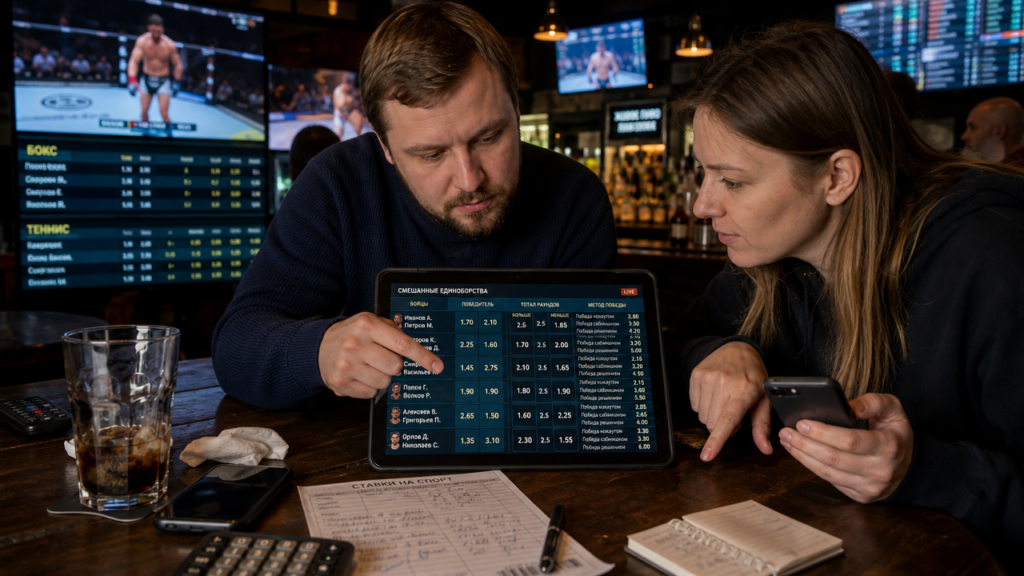
MMA betting is not a popularity contest. A fighter trading at -180 has an implied probability of 64.3 percent because you risk 180 to win 100. If your tape review says that fighter wins 70 percent of the time, the price carries value. Bookmaker markets on major MMA events cover large rosters across 11 weight classes, with three five-minute rounds on standard bouts and up to five rounds for featured events.
How Bets on Fights Work
The basic moneyline pays when your fighter wins by any result: knockout, submission, or decision. Odds like +200 convert to 33.3 percent implied probability, and -150 converts to 60 percent. Method of victory is the next sharpest market because it isolates the likely finish route. For example, a favorite with a strong submission record may be listed at a separate price to win by submission. That market can outperform the moneyline when the opponent regularly gives up back control. Over/under totals depend on round count: a 2.5-round under in a three-round fight asks whether the bout ends before 2:30 of the second round. Accumulators multiply odds but require every leg to hit, while singles reduce variance. Futures cover title outcomes and win streaks.
Where to Place Bets on Fights
Legal and regulated bookmakers in relevant jurisdictions offer dedicated MMA lines. Some operators advertise odds up to 100.00 in decimal format and more than 115 markets for major fights on desktop and mobile. Promotional offers may include welcome bonuses and cashback, but their terms should be checked before registration. A good bookmaker also shows odds changes, totals for evenly matched fights, and round-specific props. Security protocols such as SSL encryption and an applicable gaming license matter when you register and deposit. The question is not only where to place a bet on fights, but which bookmaker offers the strongest markets for methods and totals.
Reading the Odds and Finding Value
Betting odds on a fight move with sharp money, late injury reports, and weight-cut news. For example, a missed-weight situation could shift a decision prop because dehydration may affect late-round output. Compare the moneyline with the method market before betting on a favorite. The table below highlights four standard markets.
| Market | What it pays | Best Use | Example Odds |
|---|---|---|---|
| Moneyline | Straight winner | Single low risk | -150 favorite, +120 underdog |
| Over/Under rounds | Fight lasts over or under a line | Evenly matched fights | Over 2.5 -130, Under 2.5 +110 |
| Method of victory | KO/TKO, submission, decision | Style-mismatch finishes | Submission +350 |
| Round betting | Winner in a specific round | Early vs. late fight scripts | KO in Round 1 +500 |
The method market can carry less efficient pricing than the moneyline because public bettors often chase knockout props against durable grapplers. As an illustration, if a fighter has a 40 percent submission finish rate and the submission prop is +350, the implied 22.2 percent price may undervalue that route.
Breaking Down Every Card
Start each fight with the style interaction, not the name on the poster. An illustrative matchup between a pressure boxer and a reactive wrestler may create a fast pace that pushes totals, unless the wrestler finds a rear-naked choke. Takedown defense and clinch control help determine whether the striker can keep the fight standing. A strong takedown defender facing an opponent who frequently attempts takedowns may support a decision prop or an over bet. Recent opponent strength matters just as much: a knockout over a fringe contender tells you less than a decision loss to an elite wrestler. Venue altitude, early travel, and short-notice replacements can change cardio and game plans.
For a card, form a fight script for each bout. The opening exchange can shape the first two minutes. If the favorite cuts the cage and forces clinch work, the under may be live. If the underdog has a submission threat from guard, the over remains active even when that fighter is losing minutes. A sharper play than the moneyline might be a split stake: 0.75 units on under 3.5 rounds at -115 and 0.25 units on the favorite by knockout in rounds 1–2 at +260. That structure pays if the favorite finishes early and preserves value if the fight ends in the second round.
Avoid betting on popularity. Older fighters on losing streaks, heavy weight cuts, and late replacements may underperform market expectations. Totals and method props can help challenge stale lines. Check odds changes on the day of the event, because a two-point move on a decision prop may signal sharp information. The best fight bet is not always the moneyline; it is the market where your read of pace, grappling defense, and finish route differs from the posted number.